
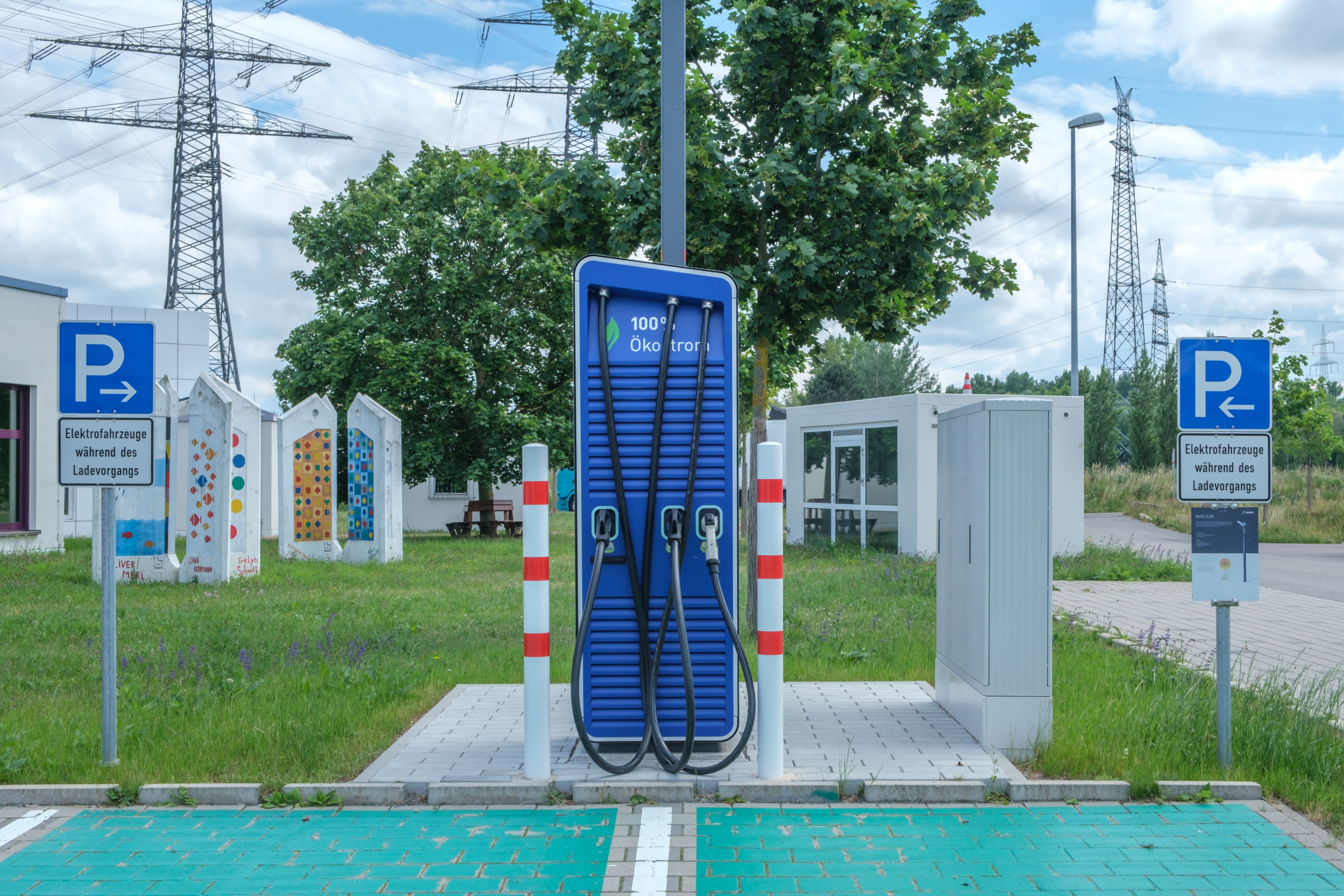
1. Introduction: Commercial & Fleet EV Infrastructure Expansion
The rapid electrification of light-duty passenger vehicles, commercial fleets, and municipal transit buses has created an unprecedented demand for scalable Electric Vehicle Supply Equipment (EVSE) charging infrastructure across commercial real estate, parking structures, industrial logistics hubs, and multi-family developments.
Engineering commercial EV charging projects requires solving complex electrical capacity, voltage drop, civil trenching, utility service interconnection, and ADA accessibility challenges. Under the National Electrical Code (NEC Article 625), EVSE loads are classified as continuous continuous duty, requiring rigorous electrical load calculation audits and dedicated overcurrent protective devices (OCPD).
ENGINEERING INSIGHT
Adding ten 80-Amp Level 2 commercial EV chargers to a building requires an additional 1,000 Amps of 208V 3-phase electrical capacity. Implementing Automatic Load Management Systems (ALMS) can reduce required peak utility capacity by up to 50% without compromising charging throughput.
2. Section 1: Level 2 AC vs Level 3 DC Fast Charging Power Requirements
Understanding the fundamental electrical differences between Level 2 AC charging and Level 3 DC Fast Charging (DCFC) dictates equipment selection, transformer sizing, and utility service entrance engineering.
| Charging Level | Voltage & Phase | Continuous Power Output | Typical Application |
|---|---|---|---|
| Level 2 AC | 208V / 240V 1-Phase or 3-Phase | 7.2 kW to 19.2 kW (30A to 80A) | Workplace, Multi-Family, Overnight Fleets |
| DCFC (Level 3) | 480V 3-Phase AC Input | 50 kW to 350+ kW (100A to 500A DC) | Highway Hubs, Commercial Logistics Fleets |
3. Section 2: Electrical Load Calculations & Transformer Capacity Audits (NEC 625)
Before installing commercial EVSE, engineers must perform a formal **NEC Article 220 load calculation audit** based on 12 months of utility peak demand history or calculated connected loads per NEC 220.87.
Example: 4 x 19.2 kW Level 2 Chargers = 76.8 kW * 1.25 = 96 kVA Continuous Utility Service Load
4. Section 3: Continuous Duty Multipliers & Conductor Sizing (NEC 625.41)
Under **NEC 625.41**, EVSE branch circuit conductors and overcurrent protective devices (breakers) must be sized at no less than 125% of the maximum continuous EVSE load. For example, a 48A Level 2 charger requires a minimum 60A overcurrent protective device and #6 AWG copper conductors rated at 75°C.
5. Section 4: Automatic Load Management Systems (ALMS) & Peak Shedding
Under **NEC 625.42**, installing an approved Automatic Load Management System (ALMS) allows engineers to limit maximum demand on the service panel or feeder. ALMS dynamically throttles power to individual charging ports when total facility load approaches utility transformer threshold limits.
6. Section 5: ADA Accessibility Requirements & Civil Site Layout Plan Sets
Under the California Building Code (CBC Chapter 11B) and federal ADA guidelines, commercial EV charging parking facilities must provide designated accessible EV charging stalls. Civil site plans must detail maximum 2% cross-slopes, 60-inch minimum access aisles, bollard impact protection, and operable hardware height (15 to 48 inches above ground).
7. Section 6: Utility Service Entrance Upgrades & Step-Down Transformers
High-capacity DC Fast Chargers operating at 480V 3-phase power often require dedicated pad-mounted utility transformers (e.g., 500 kVA to 2500 kVA). The engineering drawing set must include utility service trenching routes, conduit schedule, pull boxes, and concrete pad details.
8. Section 7: Microgrid Integration: Paired Solar PV & Battery Storage
Integrating rooftop or solar canopy PV arrays with battery energy storage systems (BESS) mitigates utility demand charges (which can exceed $30 per kW per month for commercial fast charging) by peak-shaving high-current charging spikes.
9. Section 8: AHJ Building & Fire Code Compliance (NFPA 70 / CBC Chapter 11B)
Permit submittals for commercial EV charging hubs must pass structural foundation review (for concrete-anchored charging pedestals), electrical plan check (NEC 625), and local fire department access approval.
10. Summary: EV Infrastructure Engineering Inspection Checklist
| # | EVSE Engineering Check Item | Code Reference | Verification |
|---|---|---|---|
| 1 | Conductors & OCPD sized to 125% continuous duty | NEC 625.41 | ✅ Verified |
| 2 | NEC 220 12-month peak demand load audit completed | NEC 220.87 | ✅ Verified |
| 3 | ALMS load control system specifications included | NEC 625.42 | ✅ Verified |
| 4 | ADA accessible stall clearances & access aisle drawn | CBC Chapter 11B | ✅ Verified |
| 5 | Vehicle protection bollards (4" Schedule 40) detailed | Local AHJ / CBC | ✅ Verified |
| 6 | Utility transformer pad & 480V 3-phase SLD specified | Utility Handbook / NEC 450 | ✅ Verified |
NEED PERMIT-READY EV CHARGING PLAN SETS?
At Daniel Solar Engineering and Design, our licensed P.E. engineering team prepares complete commercial Level 2 and DC Fast Charging permit plan sets, load calculations, and site plans in 24 to 48 hours.